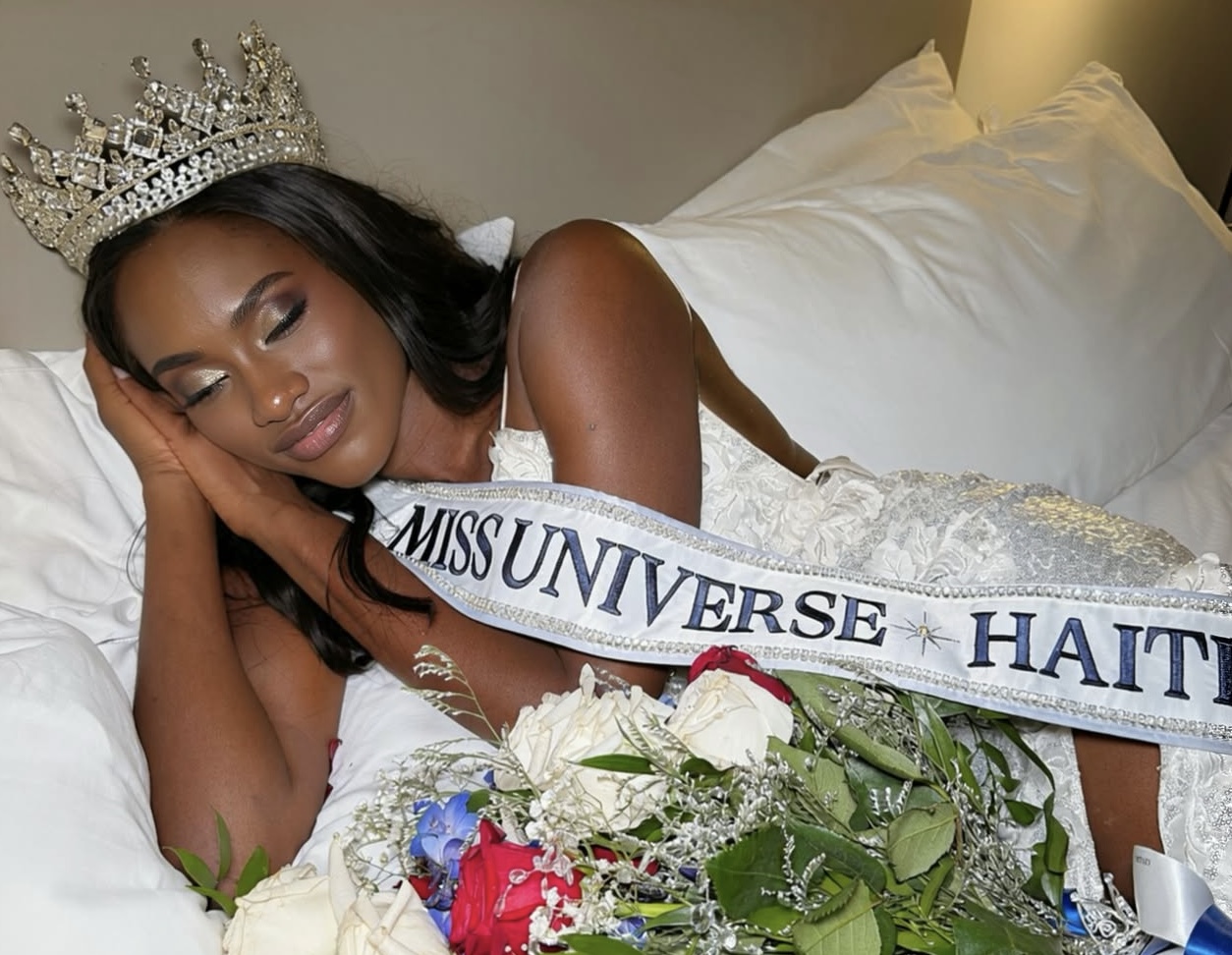



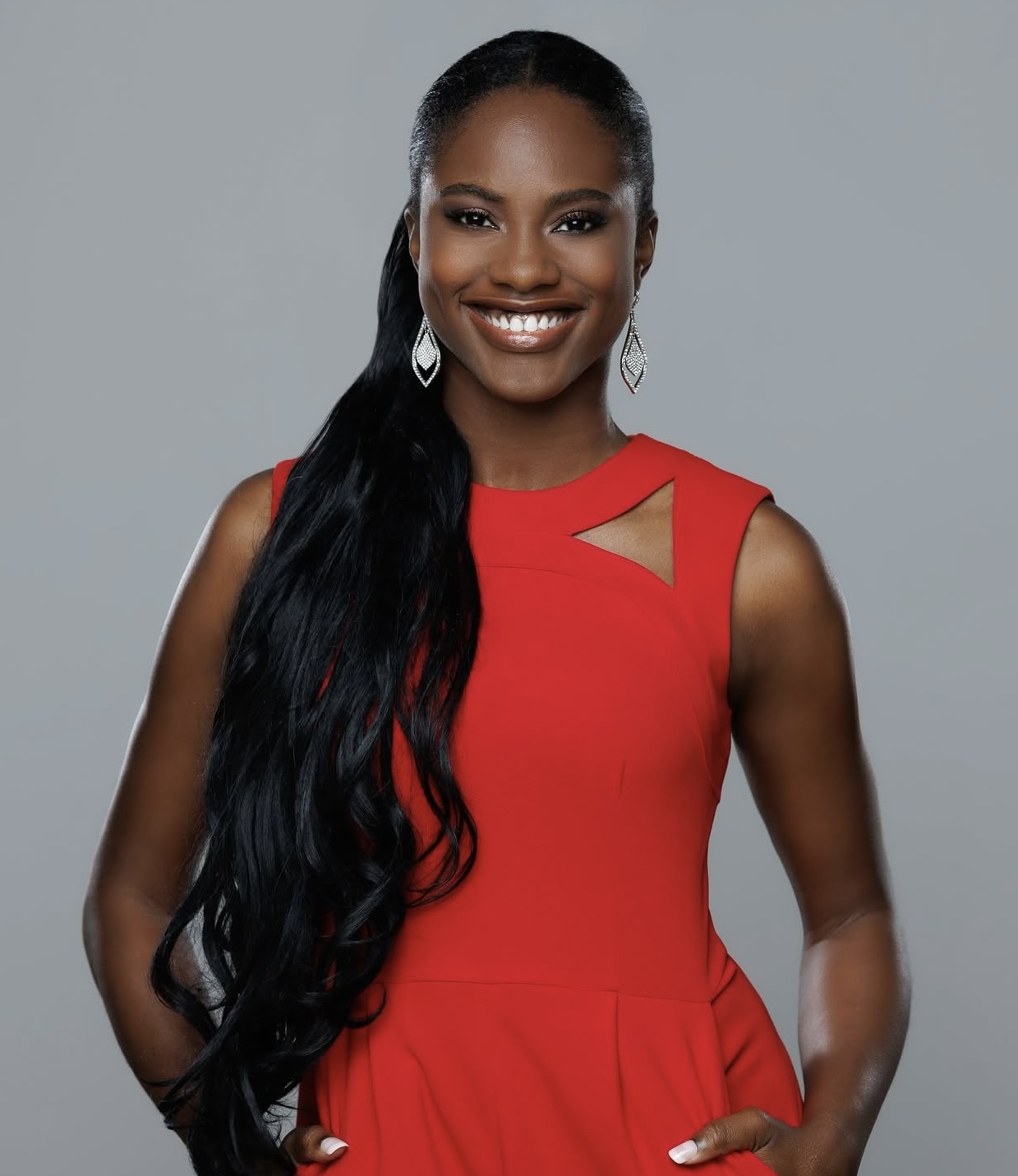
When Tatenda Rameau heard her name called as Miss Universe Haiti 2026, it wasn’t just a moment of personal triumph, it was the culmination of a life spent defying boxes and redefining narratives. In an exclusive interview, the newly crowned Miss Universe reflects on her journey from Haiti to France to the global stage, and what it truly means to carry the weight of representation.
“It felt like such a blessing,” Rameau recalls, her eyes lighting up as she remembers the moment. “I looked out into the crowd and I saw my mom break down in tears. In that instant, I knew this position was going to be a great opportunity to tell stories about Haitians and to share our culture with the world in a positive way.”
Even now, days into her reign, the reality hasn’t fully settled in. “I’m going about my day and then it’ll just hit me, you’re Miss Universe. It’s still surreal,” she laughs. “I’m still getting used to it, and I’m not sure I ever will.”
What makes Rameau’s story extraordinary isn’t just the crown she wears, but the hands that shaped her to wear it. Raised by her Haitian mother, a criminal lawyer, a storyteller, and by all accounts, an unforgettable force, Tatenda learned early that life is far more nuanced than surface appearances suggest.
“My mom had me in one hand and a law book in the other,” Rameau explains with deep affection. “While other kids were reading nursery rhymes, I was learning about the complexities of human behavior and justice. She taught me that a good argument is a good story.”
This lesson became foundational to Tatenda’s philosophy. “You have the facts of the case, right? But you have the story behind it,” she elaborates. “Life is more complicated than just stealing bread or silverware. There’s always more to understand.”
Her mother’s greatest gift, however, was perhaps simpler and more powerful: a belief in truth. “She always told me, ‘Tatenda, the truth is beautiful,'” Rameau says softly. “That’s why I’m a terrible liar to this day.”
Growing up surrounded by strong, independent Haitian women,her mother, grandmother, and aunts, Tatenda absorbed not just cultural pride but a quiet determination to forge her own path. But that path wasn’t without obstacles.
At 12 years old, Tatenda faced a pivotal moment. Her family had recently immigrated to France, and she was struggling. Bullied and isolated, she was offered a choice most children should never have to make: stay in France or return to Florida with her grandmother.
“I remember sitting in the living room, and my mom looked at me and said, ‘I can send you back,'” Rameau recalls, her voice steady but emotional. “Even at 12, I knew this was a life-changing decision. I looked at her and said, ‘I have to stay because I can’t let this situation win.'”
That choice set the trajectory for everything that followed. Learning French, embracing discomfort, and choosing to stay, each decision was an act of resistance against the limitations others tried to impose on her.
Growing up between cultures, Tatenda encountered a recurring challenge: people’s insistence on defining her. In France, they couldn’t fathom that she could be both Haitian and American. They assumed she was African and the way they meant it wasn’t kind.
“They would say I couldn’t possibly be American,” she reflects. “And when they made those assumptions, they used them as license to demean me. At first, I was hurt. But then I realized something powerful: if that’s the narrative they need, I’ll give them the best representation possible. Because clearly, they had a lot to learn.”
This experience of being “othered,” of having labels thrust upon her, has been a constant throughout Rameau’s life. Yet she’s transformed it into purpose rather than pain.
“We as humans should be more connected than we are different,” she says with conviction. “My goal isn’t to change everyone’s minds. It’s to authentically be myself and walk into a room without editing my identity, my race, or who I am. When I do that, real change happens.”
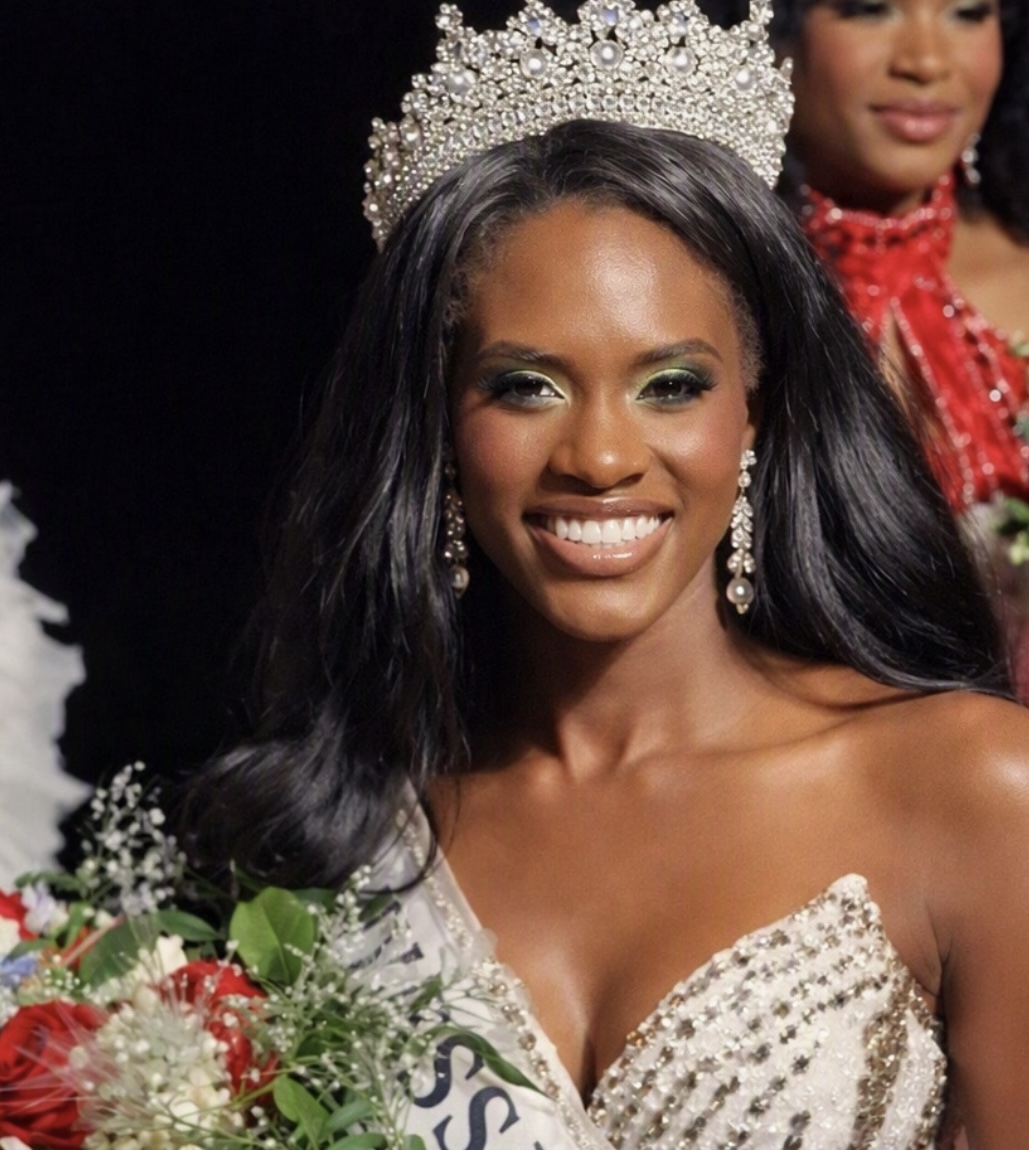
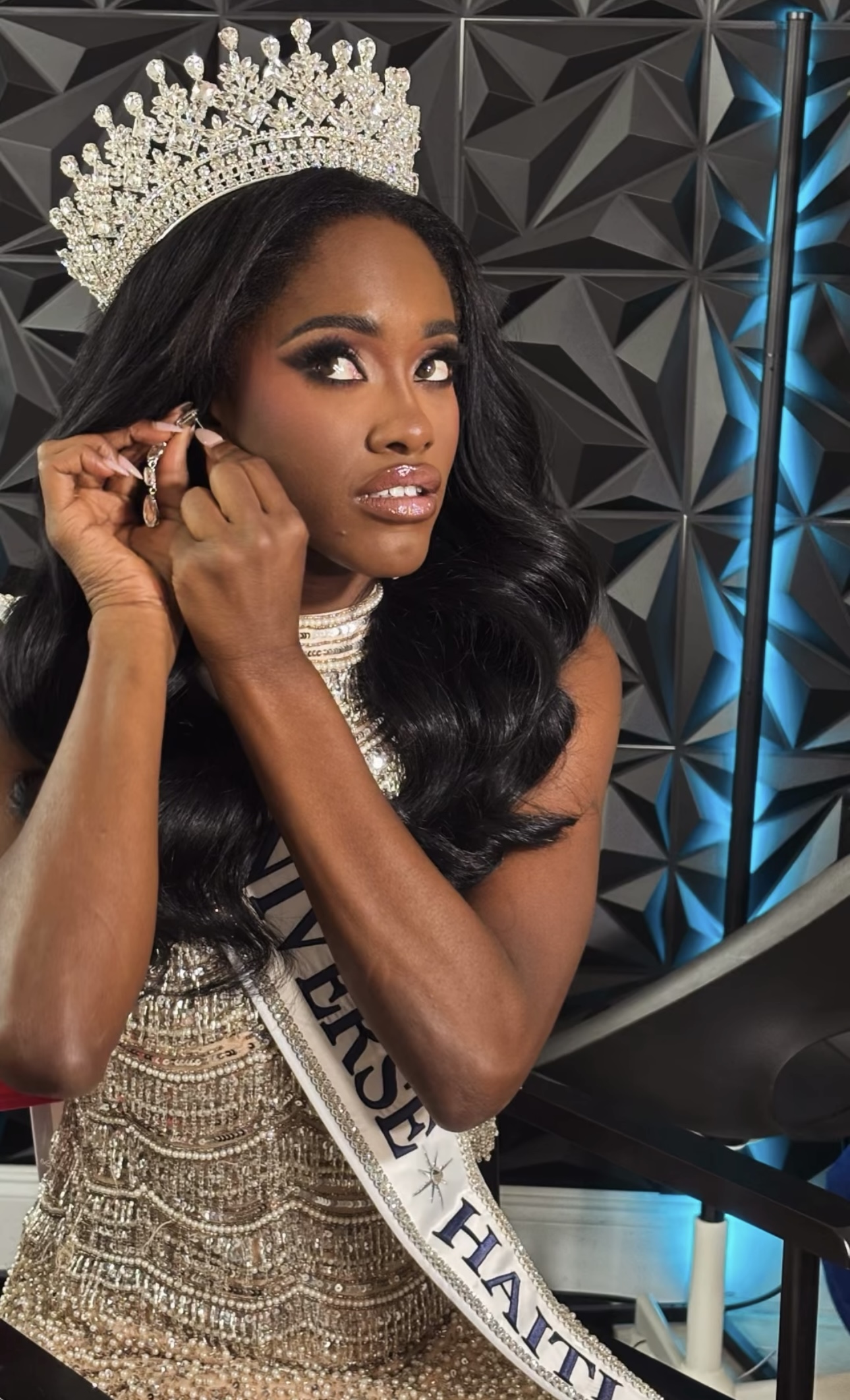
As Miss Universe 2026, Rameau is acutely aware of the platform she’s been given and the responsibility it carries. For her, this year isn’t about pageantry alone; it’s about reshaping how the world sees Haiti.
“The media has pegged Haiti wrong,” she says bluntly. “I love an underdog story, and Haiti is the ultimate underdog. We’re the first independent Black republic in the world. That’s not just history, that’s power.”
Her vision for the year ahead is expansive. “I want to show just how beautiful, how diverse, and how strong we are,” she explains. “Being Haitian isn’t monolithic. There isn’t just one perfect way. We have Haitians born in Haiti, Haitians in the diaspora who’ve immigrated for countless reasons. It’s such a diverse experience, and I want to bring our community closer together.”
But for Tatenda, the crown is merely a tool for work she’s already been doing for over four years through her passion project, Found in Translation, an arts accessibility platform that amplifies artists and gives communities the tools to tell their own stories.
“Whether I’m in a school or a nursing home, my goal is the same: to give people the skills to communicate their stories effectively,” she says. “I don’t think you’re ever too old to learn how to tell your story.”
This commitment to storytelling and human connection is what drives her beyond the pageant. “I’m an actor, a storyteller, a journalist,” she reminds us. “I want to tell stories that matter. Beyond this year of wearing the crown, my goal is to make people feel more connected than ever.”
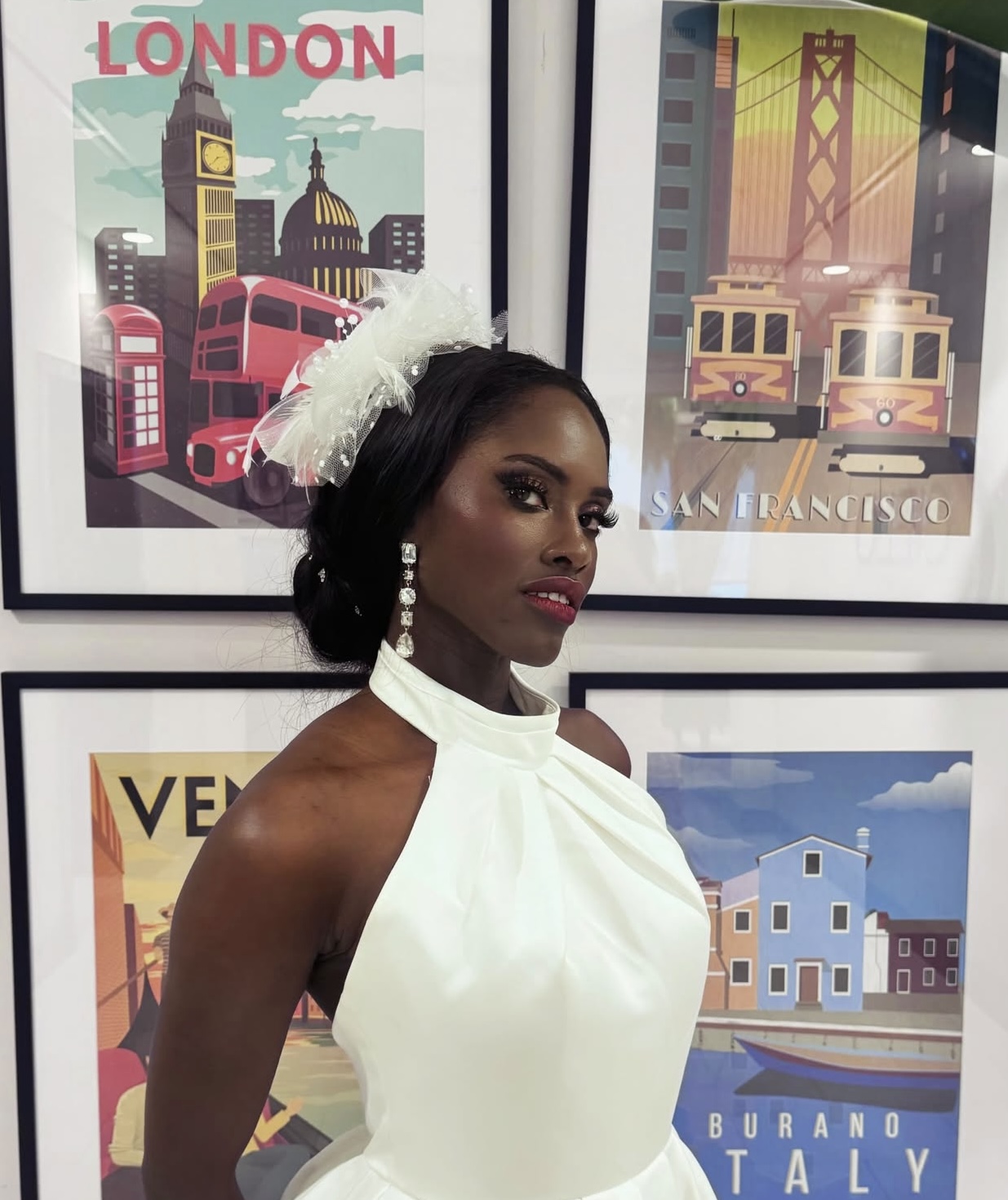
For young women watching Tatenda’s victory and dreaming their own dreams, she has counsel born from lived experience:
“The moment is now. Think of it as your prep for your dream. No one’s watching you right now, that’s a blessing. Be bold, make mistakes, don’t try to be a perfectionist. And please, don’t try to be me. Be yourself. Your dreams will come true 100%, and you want to be ready when they do. So start preparing now.”
As Tatenda Rameau steps into her role as Miss Universe 2026, it’s clear that this crown isn’t a destination, it’s a launchpad. With her mother by her side (as she’s been throughout her life), her commitment to storytelling, and her unwavering belief in human connection, Rameau is poised to do exactly what she set out to do: change the conversation about Haiti, about identity, and about what it means to be unapologetically yourself on the world stage.
“I wouldn’t have it any other way,” she says of the responsibility ahead. “This is bigger than the crown. This is about legacy.”
In a world that profits from division, Tatenda Rameau represents something radical: the refusal to be simplified. She is every woman who has ever been told to fit into a box and chose instead to break it open. She is every daughter who inherited her mother’s belief that truth is beautiful, and decided to live accordingly.
The crown sits lightly on her head because she was never really chasing it. She was chasing something far more elusive: the chance to be heard. The chance to speak. The chance to tell her people’s story before anyone else could rewrite it.
And she is just beginning.