


She was ten years old, alone in the attic of a country house, holding a cassette recorder up to a skylight. Below her, a forest. Inside it, birdsong, different at dawn, different at dusk, different again in the small hours of the night. Nathalie Leonoff recorded them all. And somewhere between the light and the dark and the singing, a child made herself a promise.
One day, I’m going to sing like that.
Decades later, after the Arc de Triomphe, after the ministries, after the anthems sung before governments and heads of state, she is certain it was never really a wish. It was a premonition. “I knew, even as a little girl, that I would have a career like this,” she says. “Why? God alone knows.”
It started at eight. Country fairs. Churches, where she sang canticles as a chorister while a woman played the organ. Her voice already carried a timbre so pure and pronounced that strangers kept telling her the same thing: this child belongs in opera.
She knew they were right. She also knew she wasn’t ready. Opera is not a gift you unwrap, it’s a discipline you survive: years of training, an athlete’s routine, sacrifice measured in decades. So she waited, and in the waiting she wandered. She fronted a rock band, though she sang the great French standards rather than rock. She taped songs off the radio and taught herself to compose on that same little machine she’d carried into the woods.
When she finally committed, she did it with both hands. She worked to pay for her own lessons. She studied privately with a professor from the Paris Conservatoire, trained at the conservatory of Issy-les-Moulineaux, and spent years under a master vocal coach handpicked for her by the director of studies at the Opéra Bastille.
And she was lucky in her mentors, none more than Maurice Panigel, a distinguished scientist who became a second father and wrapped her childhood in classical music. “He pushed me upward,” she says. It is the first of the encounters she treasures above all else. Because here is her one unshakeable belief about this business: talent is not enough. “You can have a beautiful voice,” she says, “but if you don’t make the right encounters, it’s complicated.”
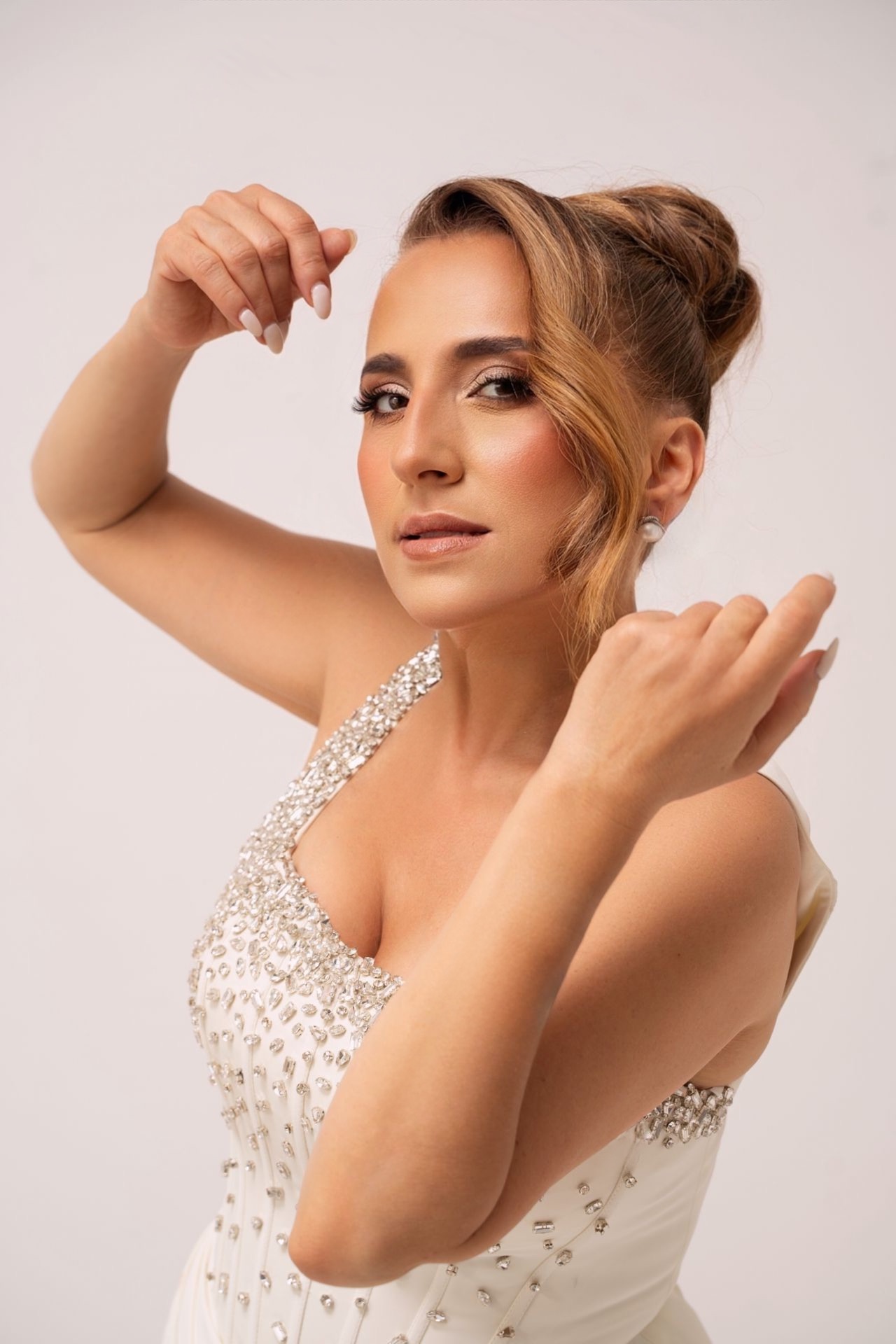
Here is how Nathalie Leonoff launched her career: not with an agent, but with a stack of directories and a lot of nerve.
In the early days of the internet, she bought show-business guides at the Fnac, page after page of artistic directors, journalists, media contacts, the whole of France in an address book. Then she sat down and, over two months, wrote roughly five thousand emails, one after another, each one introducing a soprano nobody had heard of yet.
The replies came. The interest came. The concerts came.
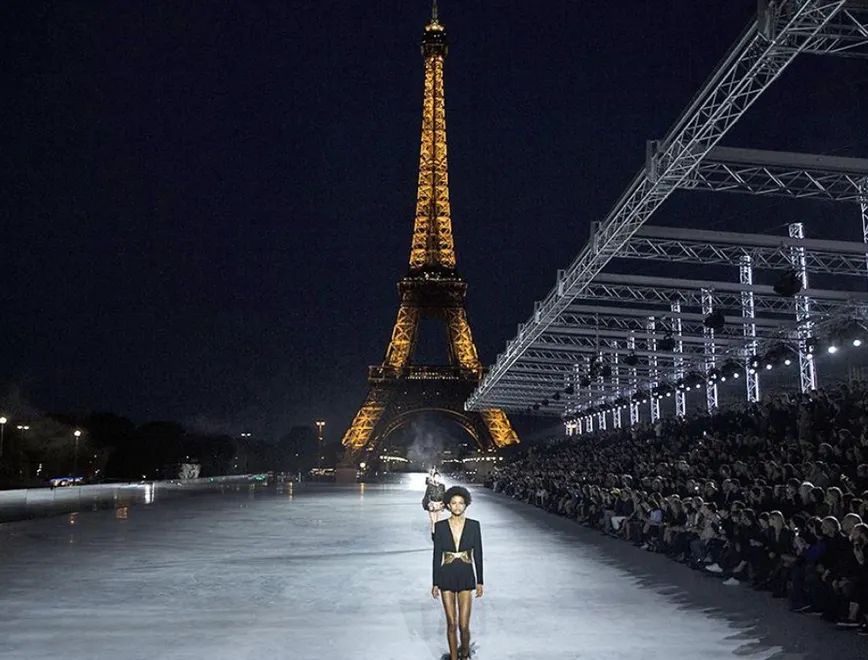
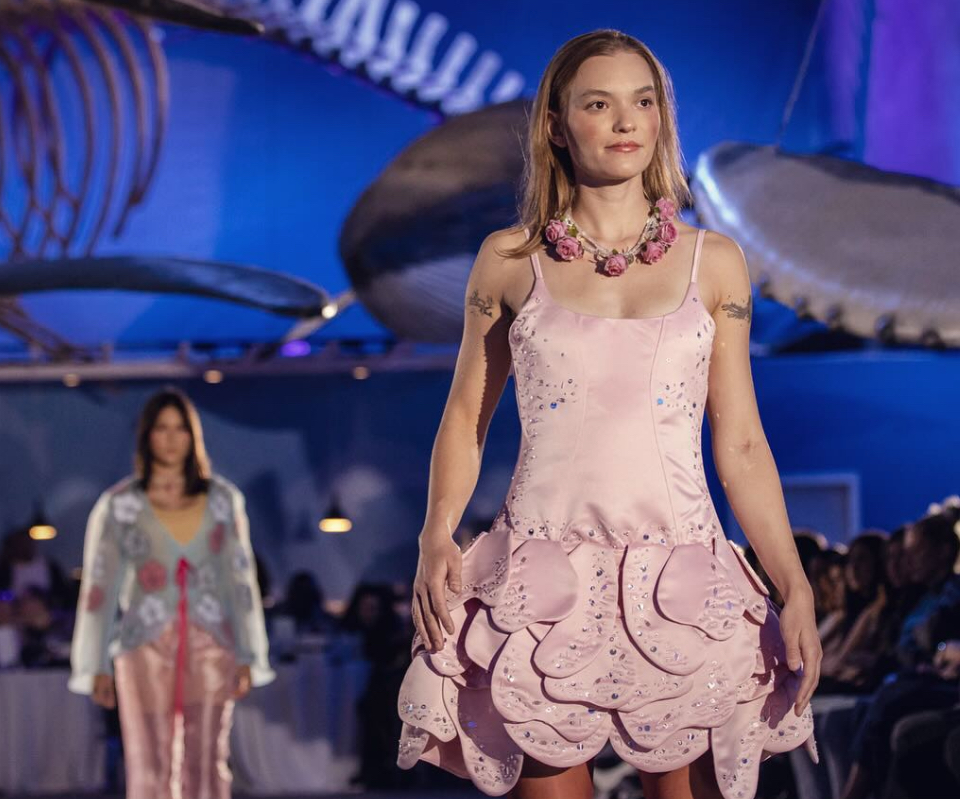
What followed reads like a passport stamped in gold. Recitals for global oil and pharmaceutical groups in the grand opera-house salons of Paris. Thousands of people before her at the Château de Chambord. Stages across Europe and cruises past the ice of Greenland, Iceland, Norway and the Faroe Islands. An author-composer-performer with a repertoire wide enough to move from a fashion runway to a Puccini aria in a single breath, operatic arias in one hand, her own compositions, in several languages, in the other.
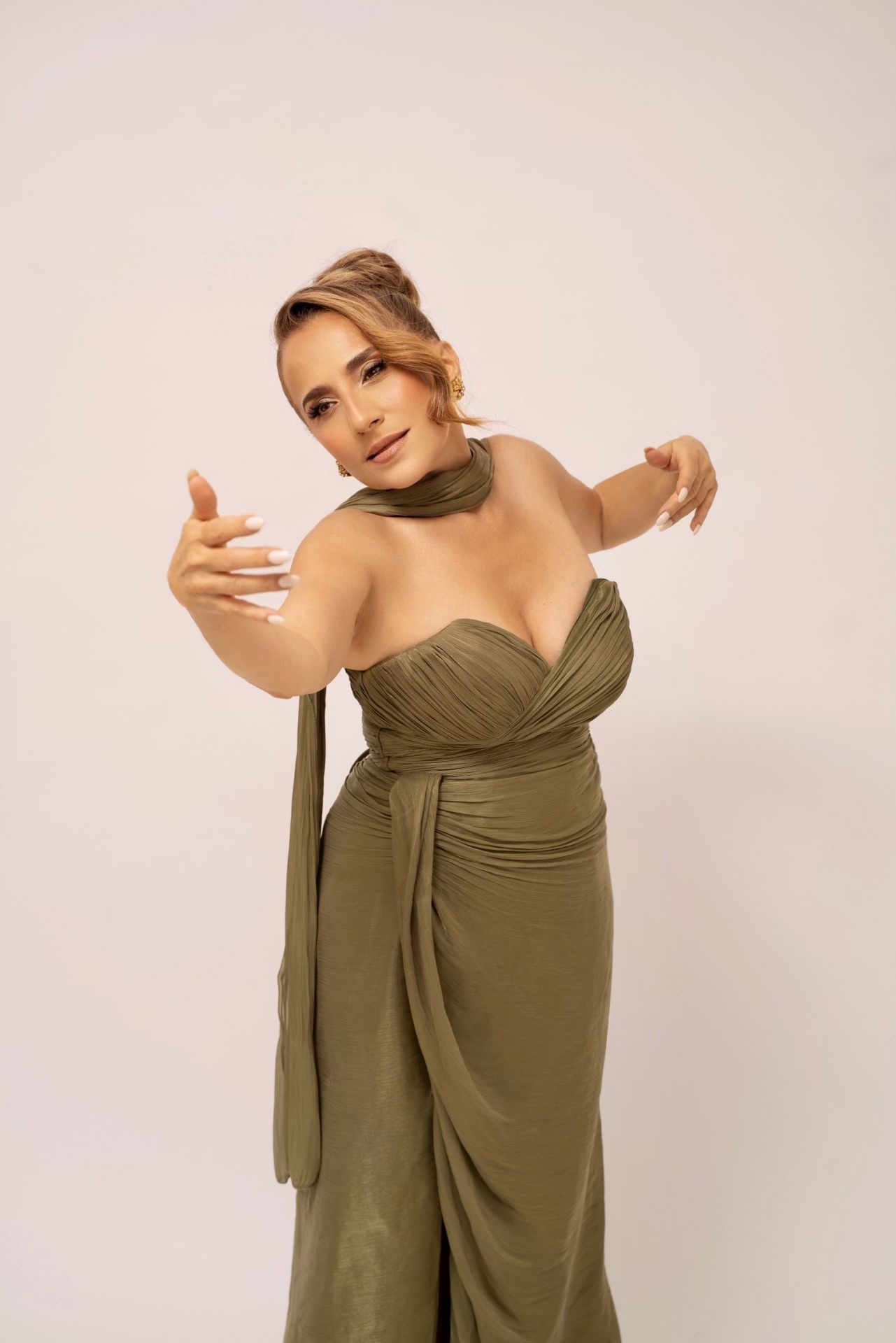
People ask her the same question again and again: where does it come from the courage, the fight, the refusal to give up? For a long time she kept the answer to herself. She offers it now because, she says, it is anything but incidental.
Nathalie was abandoned at birth. At nine days old she was given up by her parents and placed in the care of the French State. She grew up with none of the things most people take for granted, no family to call her own, moving between orphanages, foster homes and children’s institutions across France throughout her entire childhood.
Her master, the vocal coach entrusted to her by the director of musical studies at the Opéra Bastille, once told her something she has never forgotten. If you have this courage and this voice today, it is no accident. Without that past, you would not have this timbre. Everything can be heard in your voice.
That, perhaps, is the truest source of her force. “You have to keep moving forward,” she says, “even when life isn’t simple at the start. You just keep going.”
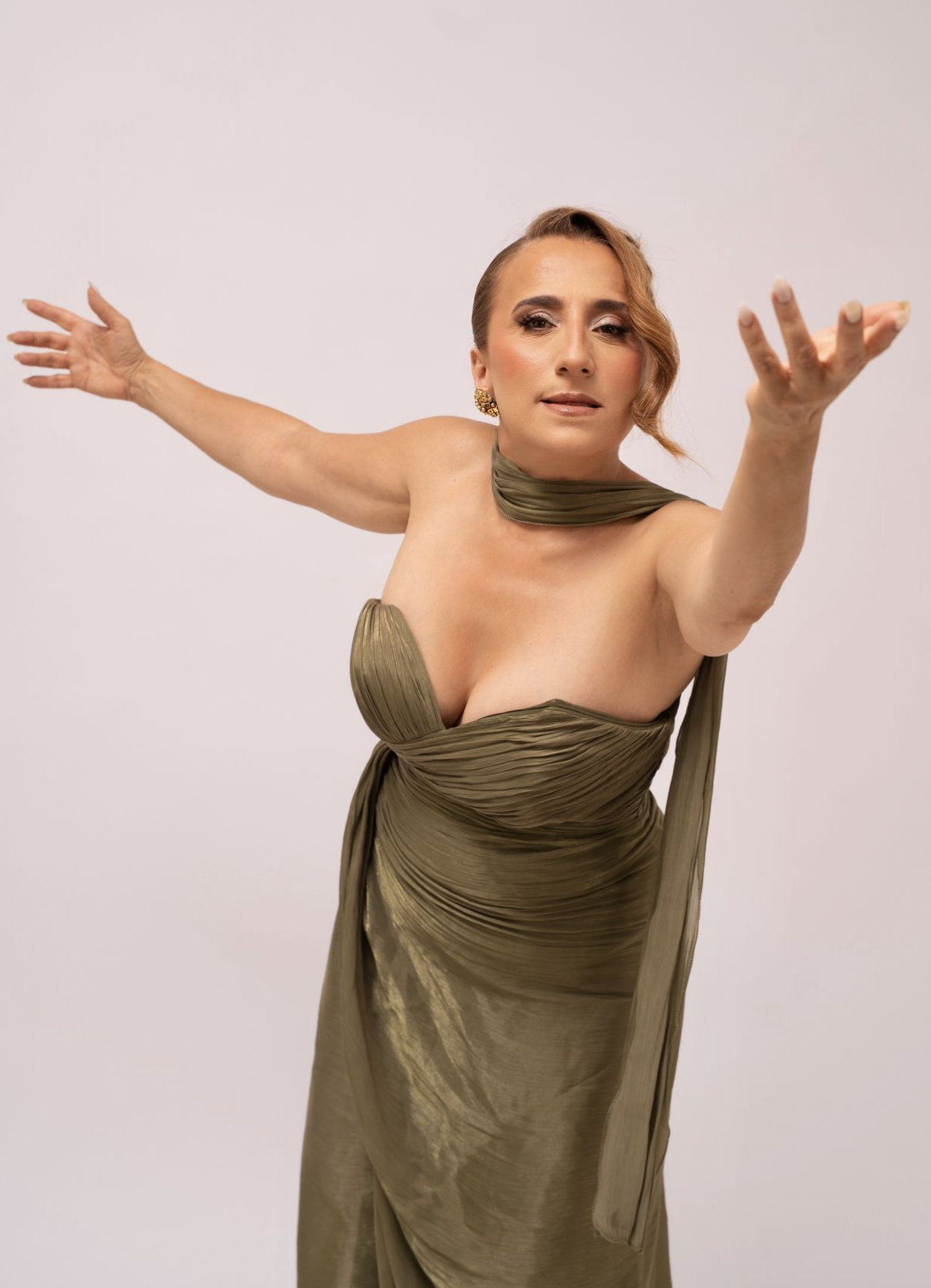
Then the nations came calling.
She was handed the anthems of Europe, French, German, English, European, and the Spanish anthem, which famously has no words, so she sang it as a pure, wordless vocalise. She stood beneath the Arc de Triomphe, faced the Champs-Élysées, and delivered La Marseillaise a cappella. She sang it again in the offices of French ministers.
She crossed languages that weren’t hers. Invited to Niger by the great designer Alphadi to open the International Festival of African Fashion. Called to Morocco to perform the Moroccan and Nigerien anthems, the Moroccan one in Arabic, a tongue she does not speak, which cost her two and a half months of relentless work. “I’m proud of that,” she says. She remembers, too, singing for the President of Niger.
But ask her for the moments that matter, and she doesn’t reach for the palaces.
She staged an opera inside the prison of Meaux, a pianist beside her, an audience of inmates before her. She sang for dying children at the Necker children’s hospital in Paris, an evening at which, one witness swore, the walls simply dissolved. She sang for the homeless through the Paris charity la Mie de Pain, alongside composer Jean-Jacques Debout. “It’s the encounters you make in life,” she says, “that carry the real value.”
Nathalie talks about her craft the way an Olympian talks about theirs. The voice is a muscle, glorious, and terrifyingly fragile. Skip the daily work and it slips away. So she rehearses. Every single day. Still.
That devotion has a price, and she pays it without flinching. Her life as a partner, largely set aside for the road and the stage. “Nothing comes from nothing,” she says. “I worked enormously. I made many sacrifices. And I regret none of it.”
The hardest blows came from outside. Covid erased a full season of concerts overnight. Today’s turbulent world keeps squeezing arts budgets across France and Europe, and bookings are offered, then cancelled at the last minute. The touring has slowed. But walking away from a lifetime’s work? Unthinkable. “I didn’t reach this level to give it all up.”
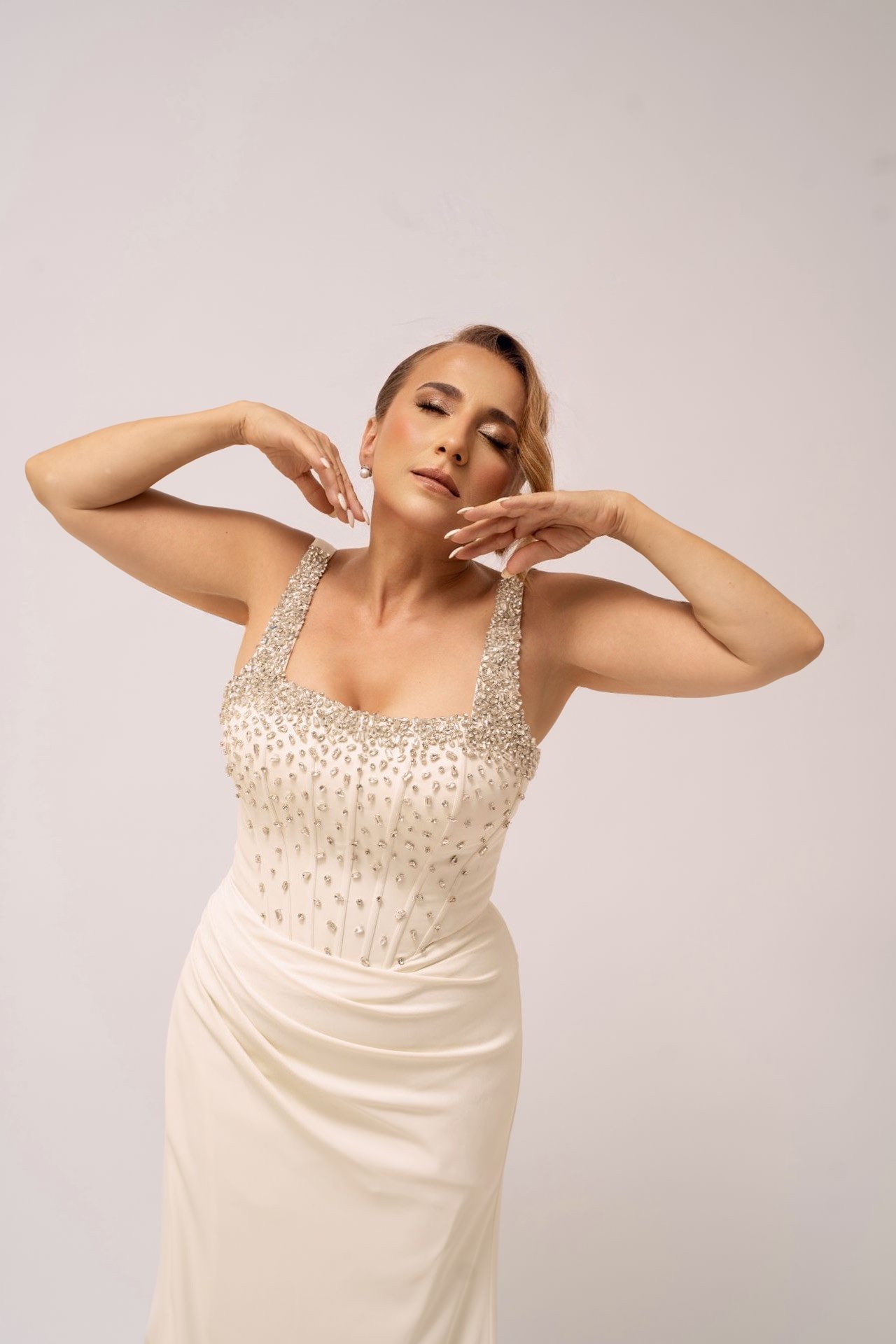
Lockdown, oddly, gave her something back. With the stages dark, Nathalie finally picked up a brush, a passion postponed for a lifetime. She calls her canvases her envol lyrique, her “lyrical flight.” “It’s the music that makes me paint that way,” she says.
She is still composing, and she watches the rise of artificial intelligence with curiosity rather than fear, wondering what it might offer her as a creative tool, while remaining absolutely certain of one thing: no machine will ever counterfeit the raw emotion of a living human voice. New projects are stirring, though she keeps them close, until they’re real.
Her parting words sound like something the ten-year-old in the attic already knew.
“If something inside you says this is for you, then it is for you. Everyone gets their chance. Because the sun shines for everyone.”